



December 16, 2025
The Israeli triple assault on agriculture (UAWC), universities, and UNRWA aims to undermine the pillars of Palestinian society.
In recent weeks, the Israeli occupation army has launched an offensive against the vital structure of Palestinian society. Far from limiting itself to military targets, this campaign systematically and coordinately attacks three fundamental pillars: agriculture, through the destruction of its material base and the organisation and assistance of farmers; education, through the siege of its universities; and humanitarian survival, through the suffocation of international aid to refugees. This is a deliberate strategy to undermine the very foundations of Palestinian existence on their land.
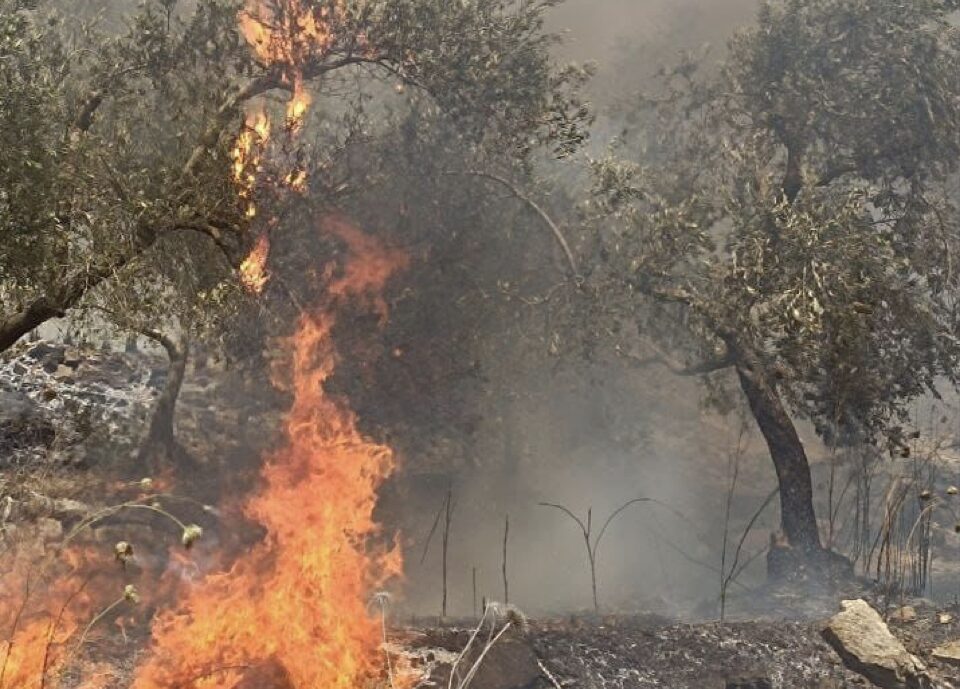
On December 1st, Israeli forces raided the offices of the Union of Agricultural Work Committees (UAWC) in Ramallah and Hebron, in the West Bank. During the incursion, they destroyed equipment, confiscated documents and computers, and arrested eight staff members who, according to the OHCHR (Office of the United Nations High Commissioner for Human Rights), were blindfolded, handcuffed, and forced to remain on the ground for hours. The attack occurred during the most violent ever recorded olive harvest season, with 167 settler attacks and at least 81 assaults against human rights defenders accompanying farmers.
The UAWC is a Palestinian civil organisation founded in 1986 and is legally recognised. For decades, it has supported farmers facing settler violence and forced displacement, defending their rights and strengthening rural resilience. In 2021, Israel arbitrarily, and without presenting evidence, designated it as a "terrorist organisation" in an attempt to criminalise Palestinian civil society and hinder its humanitarian work.
This assault on December 1st is the latest incident stemming from Israel’s systematic strategy aimed at destroying the material base of Palestinian lives and resistance. Five months earlier, on July 31st, Israeli military forces violently stormed the seed multiplication unit of the UAWC Seed Bank in Hebron. Using excavators, they destroyed infrastructure, essential equipment, and hundreds of indigenous seed varieties (known as baladi), many of which were unique and perfected over centuries by Palestinian farmers. This attack, condemned globally as an act of ecocide – that is, the deliberate destruction of the natural environment to render a territory uninhabitable – and cultural erasure, aimed to break the generational bonds between the peasantry and their land and undermine food sovereignty.
These two coordinated attacks – against the seed bank in July and against the headquarters in December – are part of a strategy that includes the uprooting of over 52,300 olive trees in the West Bank since October 2023. This is a strategic offensive against the pillars of agricultural resilience and Palestinian cultural identity.
If the attack on agriculture seeks to control the land and destroy the present, the offensive against universities aims to confiscate the future. In the early hours of December 9th, a massive Israeli military deployment stormed Birzeit University in the occupied West Bank. Soldiers handcuffed security guards, raided buildings, caused considerable damage, and confiscated staff mobile phones. A few hours later, Israeli troops replicated the same operation at Al-Quds University in Abu Dis. The Council of Birzeit University condemned these acts as a "flagrant violation of international norms" and part of "systematic colonial policies" against Palestinian education.
Since 2002, Birzeit has faced 25 raids, and more than 150 students have been arrested. The strategy is clear: in Gaza, most universities have been destroyed by bombings, and in the West Bank, methodical harassment is used to weaken the national academic infrastructure and curtail the fundamental right to education.
In addition to attacking the present and the future, Israel is also attempting to destroy the immediate survival network. This is why the United Nations Relief and Works Agency for Palestine Refugees (UNRWA) has become the third pillar of this systematic assault. In the early hours of December 8th, Israeli forces, accompanied by municipal officials, violently broke into the empty UNRWA complex in occupied East Jerusalem. They surrounded the facilities, cut communications, confiscated furniture and computer equipment, and replaced the blue UN flag with an Israeli flag. The Agency's Commissioner-General, Philippe Lazzarini, denounced this act as "flagrant contempt" for Israel's obligations as a member state, emphasising the "inviolability" conferred by UN privileges and immunities.
This raid, condemned by UN Secretary-General António Guterres, is only the culmination of a sustained harassment campaign including arson attacks, disinformation campaigns, and the adoption, in October, by the Israeli parliament, of "anti-UNRWA legislation" designed to expel the agency from territories under Israeli control legally. This law prohibits the Agency's activities throughout Israel, including occupied East Jerusalem, forcing its evacuation months ago. The offensive deliberately seeks to paralyse the institution that provides essential health, education, and assistance services to some six million Palestinian refugees.
The attack on UNRWA comes just three days after the UN General Assembly renewed the agency's mandate for an additional three years with the massive support of 151 states, a demonstration of international support for the agency and a clear rejection of the Israeli strategy.
This triple attack, in addition to the genocide perpetrated by Israel in Gaza, aims to amputate the pillars that support the identity, knowledge, and daily survival of the Palestinian people and confirms the Israeli strategy of attacking Palestinian roots to deprive them of a future.
To learn more:
Image source: