


WOFA News
West Bank at the Brink
January 4, 2026
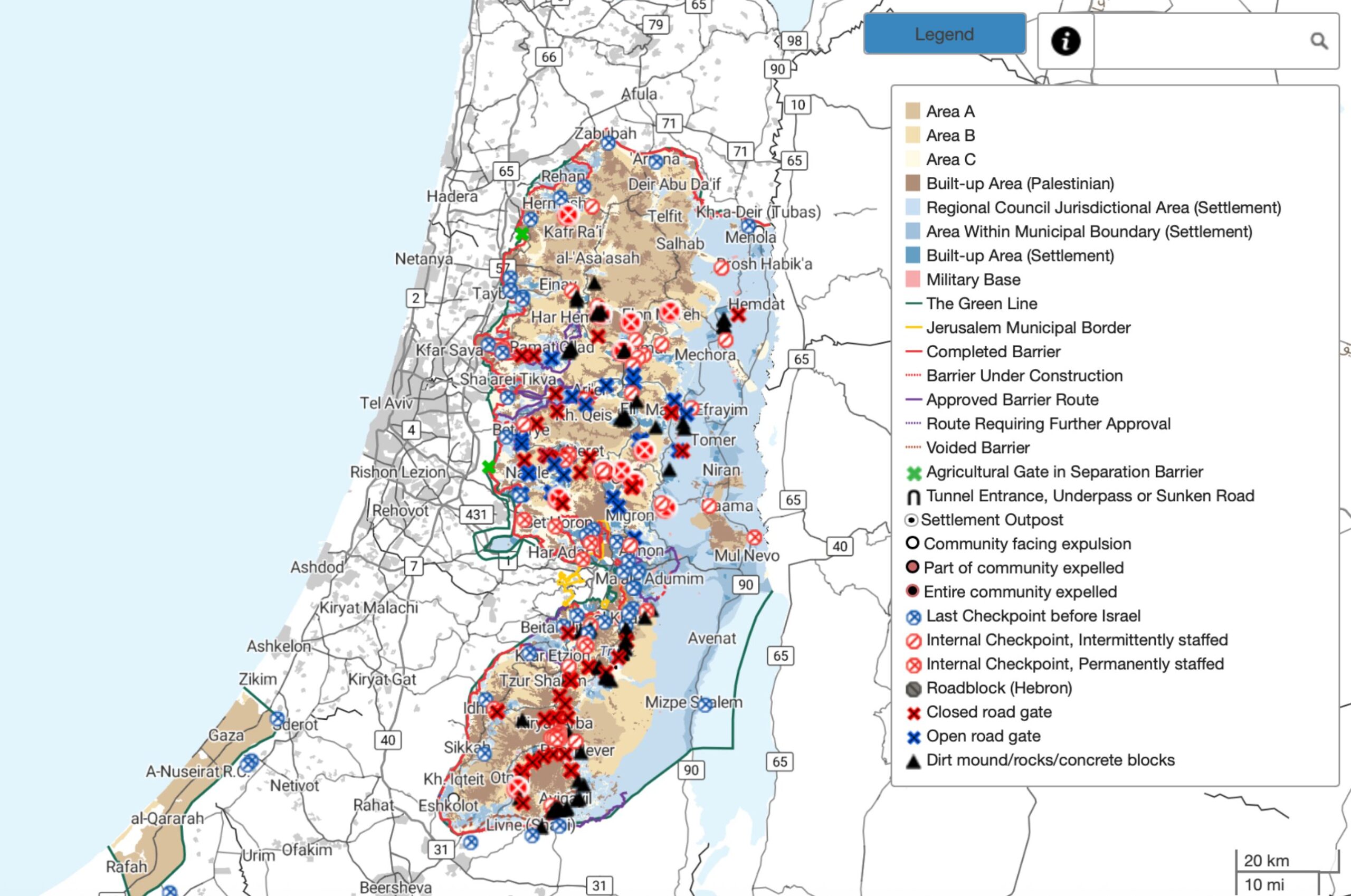
Record Pace of Illegal Settlements, Systematic Violence, and Military Operations Empty Palestinian Communities Amid International Passivity.
The increase of Israeli settlements in the West Bank reached a record level in 2025, according to the latest United Nations report. This figure confirms the acceleration of a territorial annexation that has raised the number of these colonies from 141 in 2022 to 210 today, a 49% increase in three years, according to the monitoring group Peace Now. In total, an estimated 500,000 settlers already live in the West Bank, with another 200,000 in East Jerusalem.
This accelerated expansion is only the most visible part of a colonization strategy that the UN and human rights organizations describe as war crimes. The mechanism is incremental: first, provisional outposts are erected, then consolidated with infrastructure like roads reserved for settlers, before administrative decisions are sought to legalize them retroactively. In 2025, the Israeli government approved the regularization of dozens of these enclaves.
The most recent decision was made on Sunday, December 21st, when the Israeli government approved the creation of 19 illegal settler outposts in the occupied West Bank, including four that had been evacuated in 2005 under the Oslo Accords.
These decisions have drawn condemnation from the UN and several European governments, which recall that colonial settlements clearly violate international humanitarian law. But these diplomatic statements do not stop the construction or return the land: Palestinian communities see their agricultural lands surrounded by buildings and rendered uninhabitable.
With these illegal settlements comes increased violence by Israeli settlers against rural and Bedouin Palestinian communities. The year 2025 saw a record number of houses and crop burnings, physical assaults, road blockades, and land seizures. These attacks, documented through statistics and testimonies, reveal a pattern: violence is a tool to force the displacement of the Palestinian population and facilitate the territorial expansion of the settlements.
A report by the Norwegian Refugee Council describes how entire communities in the Jordan Valley and other areas of the West Bank have been pushed to abandon their homes after months of constant harassment.
Accusations point to collusion between armed settlers and Israeli security forces: attacks occur in the presence of soldiers, complaints rarely lead to prosecution, and in some cases, military operations follow to “secure” the already vacated area. The result is a silent displacement, without dramatic images of mass expulsions, but with a devastating cumulative effect on the Palestinian demographic map.
In recent months, incursions into cities and refugee camps have multiplied, involving night raids, prolonged curfews, and the temporary occupation of homes turned into command posts or interrogation centers. In towns like Qabatiya or Jenin, Palestinian families have reported their homes being taken over by soldiers for days, forcing them to flee or remain locked inside, while arrests, destruction of infrastructure, and armed clashes took place in the streets.
Human Rights Watch has gone further by describing the “emptying” of refugee camps in the West Bank as a crime against humanity, as part of a military operation aimed at completely dismantling community life. Reinforced checkpoints, road closures, and demolitions leave large sectors of the population trapped in a space where moving, studying, or working becomes a daily challenge. Restrictions on access to agricultural land and water directly affect the food security of entire communities and weaken already precarious family economies. To this are added cases like the death of a 16-year-old Palestinian teenager in Tuqu’, shot during a raid, which illustrate how the line between a “security operation” and collective punishment blurs in practice.
Palestinian society in the West Bank deploys organized resistance and daily survival strategies. In refugee camps and cities, night raids, detentions without charge, and the permanent presence of armed forces generate a climate of chronic stress. Psychologists and local organizations warn of an increase in trauma, anxiety, and depression, especially among children and adolescents who have grown up normalizing violence and occupation. Popular committees document settler attacks and military abuses with videos and testimonies, while farmers’ organizations try to keep agricultural production alive in areas pressured by settlements. Alongside them, Palestinian and Israeli NGOs work to bring cases before national courts and international bodies, insisting on the legal responsibility of the Israeli authorities.
UN bodies, European governments, and human rights organizations have issued reports condemning the expansion of settlements, settler violence, and military operations, stating that these actions constitute grave violations of international law and war crimes. Yet, practical measures – sanctions and an arms embargo – remain limited, creating a gap between denunciations and action. This disconnect became palpable in December when Israel denied entry to a delegation of Canadian parliamentarians and NGOs seeking to observe the situation on the ground, citing a “threat to public security.” The incident reflects the impunity with which actions are taken and the risk that a de facto annexation of the West Bank could become entrenched.
What is at stake today in the West Bank affects the political horizon of the conflict. The physical fragmentation of the territory makes it harder to imagine a viable state. In parallel, settler violence and military operations are emptying communities, sketching a gradual territorial cleansing. The future of the West Bank will depend on Palestinian society's capacity to sustain its community networks and on the international community's will to move beyond rhetoric and act. For those who live there, the question is whether their people will still exist when, finally, an agreement is signed.
To learn more:
- https://www.ohchr.org/en/press-releases/2025/03/israel-ramps-settlement-and-annexation-west-bank-dire-human-rights
- https://www.hrw.org/news/2025/11/20/west-bank-israel-emptying-refugee-camps-a-crime-against-humanity
- https://www.nrc.no/news/2025/july/west-bank-israeli-state-backed-settler-violence-drives-mass-displacement-of-palestinian-communities/
- https://impactpolicies.org/news/484/west-bank-settler-violence-in-2025-a-human-rights-crisis
- https://www.nytimes.com/2025/08/14/world/middleeast/west-bank-israel-settler-attacks.html
- https://www.aljazeera.com/news/2025/12/22/illegal-settlement-expansion-how-israel-is-redrawing-occupied-west-bank
Image source: B'tselem Interactive Map, screenshot from 4 January 2025